In This Guide
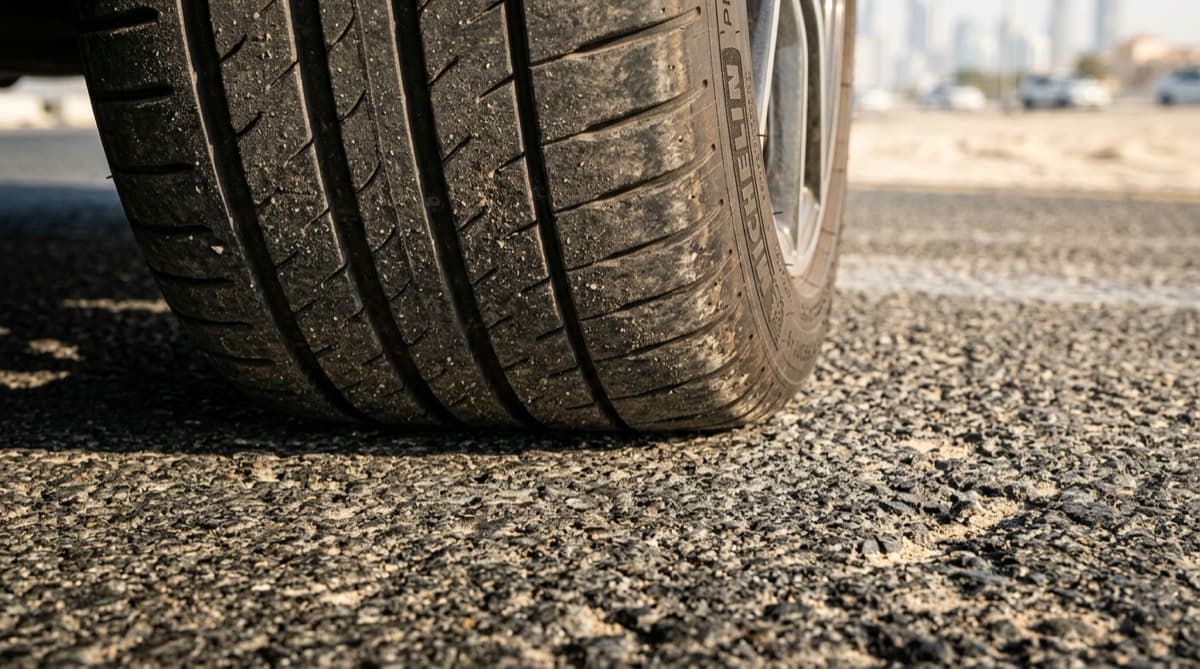
Driving in Dubai is a unique automotive experience. While the UAE boasts some of the smoothest, widest multi-lane highways in the world, the climate presents brutal environmental challenges to your vehicle's tyres. During the peak summer months between May and September, ambient air temperatures regularly cross 45°C, while direct sunlight and vehicle friction can heat asphalt surface temperatures above 60°C to 65°C.
How 60°C Road Asphalt Affects Tyre Rubber
Tyres are not simply rigid blocks of rubber; they are complex chemical compounds consisting of synthetic polymers, natural rubber, carbon black, silica, and steel radial belts. When subjected to continuous high temperatures and intense UV radiation, the plasticizers and antioxidant oils engineered into the rubber compound begin to evaporate. This process—known as thermal oxidation—causes the flexible rubber tread to harden, lose elasticity, and become brittle.
As the rubber hardens, your vehicle loses crucial grip during emergency high-speed braking on highways like Sheikh Zayed Road (E11) and Al Khail Road (E44). Furthermore, hardened rubber is significantly more prone to chipping, tread block separation, and sudden catastrophic blowouts under high centrifugal forces.
Average Tyre Lifespan in the UAE: Mileage vs Years
In moderate European or North American climates, passenger car tyres typically last between 50,000 to 70,000 kilometers or up to 5–6 years. However, in the UAE, the realistic operational lifespan is substantially shorter:
- High-Mileage Commuters (25,000+ km/year): Typically require replacement every 18 to 24 months (approx. 40,000 to 45,000 km) due to combined tread abrasion and thermal stress.
- Low-Mileage Urban Drivers (Under 10,000 km/year): Even if the tread depth appears almost brand new, tyres should be retired after 3 to 3.5 years due to rubber hardening and invisible structural decay.
Understanding DOT Date Codes & UAE 5-Year Expiry
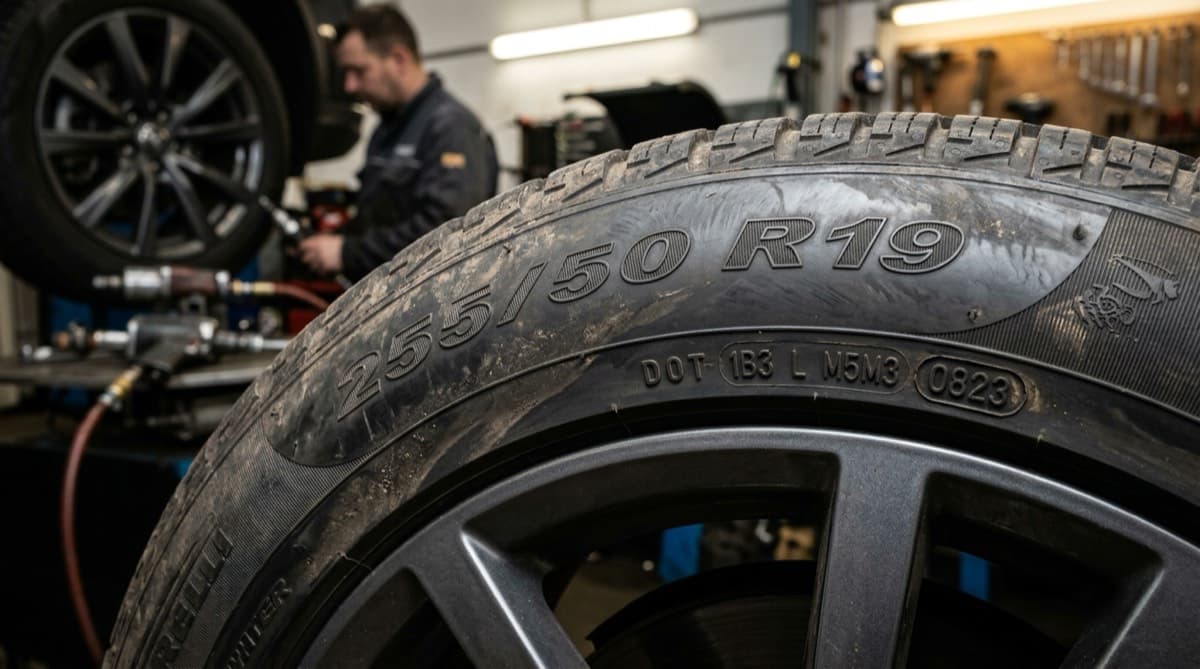
Every tyre manufactured worldwide features a four-digit DOT (Department of Transportation) date code stamped on its sidewall. The first two digits represent the week of manufacture, while the last two represent the year. For instance, a DOT code reading 2425 signifies the tyre was produced during the 24th week of the year 2025.
Under UAE federal regulations and Dubai Roads and Transport Authority (RTA) vehicle testing guidelines:
"Any passenger vehicle tyre exceeding 5 years from its manufacturing date will automatically fail annual RTA vehicle registration inspection, regardless of remaining tread depth."
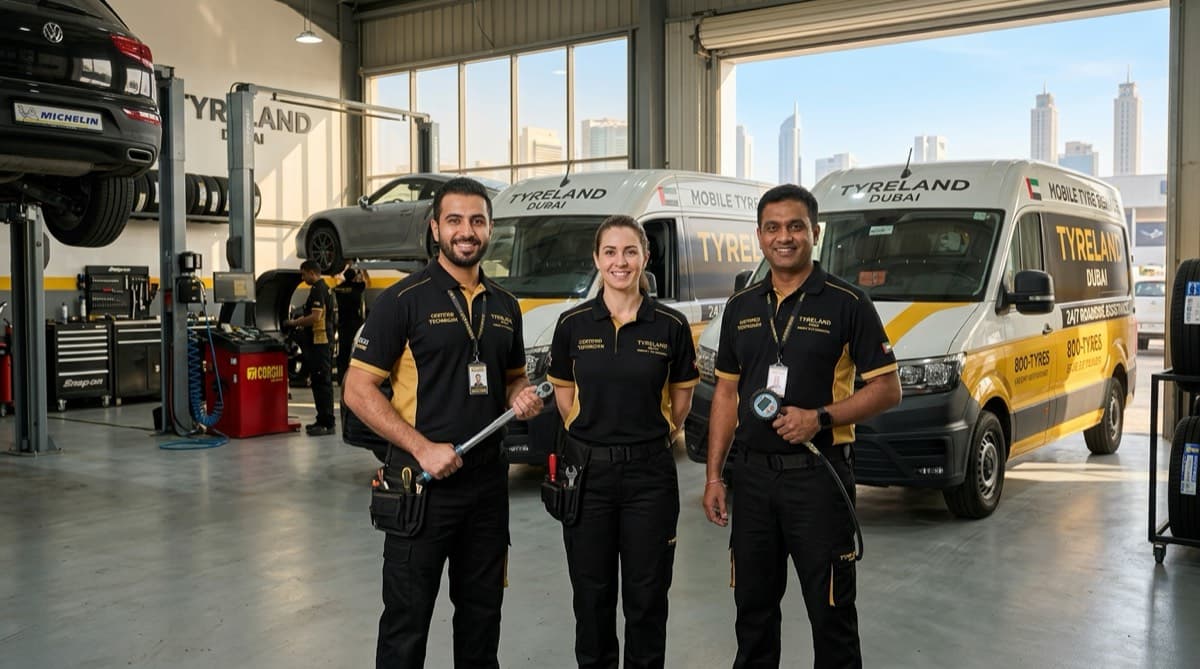
At Tyreland Dubai, we strictly install tyres with fresh, verified recent DOT dates (typically within 6 to 12 months of factory production) to guarantee maximum safe service life.
How to Spot Dangerous Thermal Dry Rot & Cracks
Drivers should inspect their tyre sidewalls and tread grooves at least once a month. Key warning signs that warrant immediate replacement include:
- Spiderweb Micro-Cracks: Fine hairline fissures appearing along the outer sidewall or within the deep tread channels indicate severe UV oxidation.
- Visible Bulges or Eggs: A circular protrusion on the sidewall indicates internal nylon or steel cord breakage—a high blowout risk requiring instant replacement.
- Discoloration & Fading: A chalky, greyish-brown patina on the tyre surface indicates that internal protective oils have fully dissipated.
5 Practical Tips to Extend Your Tyre Life in Dubai
1. Check Cold PSI Fortnightly
Always check tyre pressure in the morning before driving. Under-inflation creates excessive flex and heat buildup, multiplying blowout risks.
2. Rotate Every 10,000 KM
Front tyres wear up to 40% faster on front-wheel-drive and heavy SUV vehicles. Regular cross-rotation equalizes tread wear across all 4 wheels.
3. Computerized Balancing
High-speed driving on highways like E11 magnifies dynamic imbalance, causing premature cupping and steering wheel vibration.
4. Park in Shaded or Covered Lots
Shielding your vehicle from direct afternoon UAE UV rays significantly delays rubber oxidation and sidewall cracking.
Need New Tyres or Emergency Roadside Assistance in Dubai?
Our Mercedes mobile workshops reach your doorstep in 15–20 minutes with computerized dynamic wheel balancing included.
Frequently Asked Questions
Frequently Asked Questions
Direct, transparent answers regarding mobile tyre fitting, costs, speed, and safety in Dubai.
The UAE RTA strictly mandates that passenger tyres cannot exceed 5 years from their stamped DOT manufacturing date. Tyres older than 5 years will automatically fail inspection.