In This Guide
- • Why UAE roads are so slippery when it rains
- • What is aquaplaning?
- • How much tread depth do you need for rain?
- • Your pre-rain tyre checklist
- • How to drive safely in UAE rain
- • What to do if your car aquaplanes
- • Getting a puncture in the rain
- • Get your tyres rain-ready with Tyreland
- • Sources & References
- • Frequently Asked Questions
Before the UAE's rainy season (most rain falls between November and March), make sure your tyres have at least 3 mm of tread for safe wet-road grip. The legal minimum is 1.6 mm. Check your tyre pressure in the cooler mornings and look for summer heat damage. In rain, slow down, double your following distance, avoid standing water, and if the car aquaplanes, ease off the accelerator and keep the steering straight. Don't brake hard.
⚡ Key Takeaways
- The first rain after months of dry weather is the most slippery, because oil, rubber dust and sand on the road turn into a slick film.
- Tyres lose wet grip long before they reach the legal limit. Plan to replace them at around 3 mm.
- Tyre pressure drops as temperatures fall, roughly 1 psi for every 5–6°C.
- Summer heat can leave cracks and bulges that only show up on a close inspection.
Why UAE roads are so slippery when it rains
Months of dry weather leave a layer of oil, fine rubber particles and sand on the road surface. When the first rain falls, it mixes with that layer into a slippery film before there's enough water to wash it away. Add drivers who rarely get practice on wet roads, and the first rainy days of the season see a sharp rise in accidents.
UAE rain also tends to come in short, intense bursts. In April 2024, the National Center of Meteorology recorded 254.8 mm of rain in under 24 hours at Khatm Al Shakla in Al Ain, the heaviest rainfall since UAE records began in 1949. Roads, underpasses and drainage can be overwhelmed very quickly.
What is aquaplaning?
Aquaplaning (also called hydroplaning) happens when water builds up in front of a tyre faster than the tread can channel it away. The tyre lifts onto a thin layer of water and loses contact with the road, along with steering and braking.
The risk rises with: - Speed. The faster you go, the less time the tread has to clear water. - Worn tread. Shallower grooves move far less water. - Under-inflated tyres, which deform and channel water less effectively. - Standing water, especially in the outside lanes and near underpasses.
How much tread depth do you need for rain?
| Tread depth | What it means |
|---|---|
| 7–8 mm | Typical depth of a new car tyre |
| 3 mm | Recommended point to replace for good wet-road safety |
| 1.6 mm | Legal minimum in the UAE. Fails RTA inspection below this |
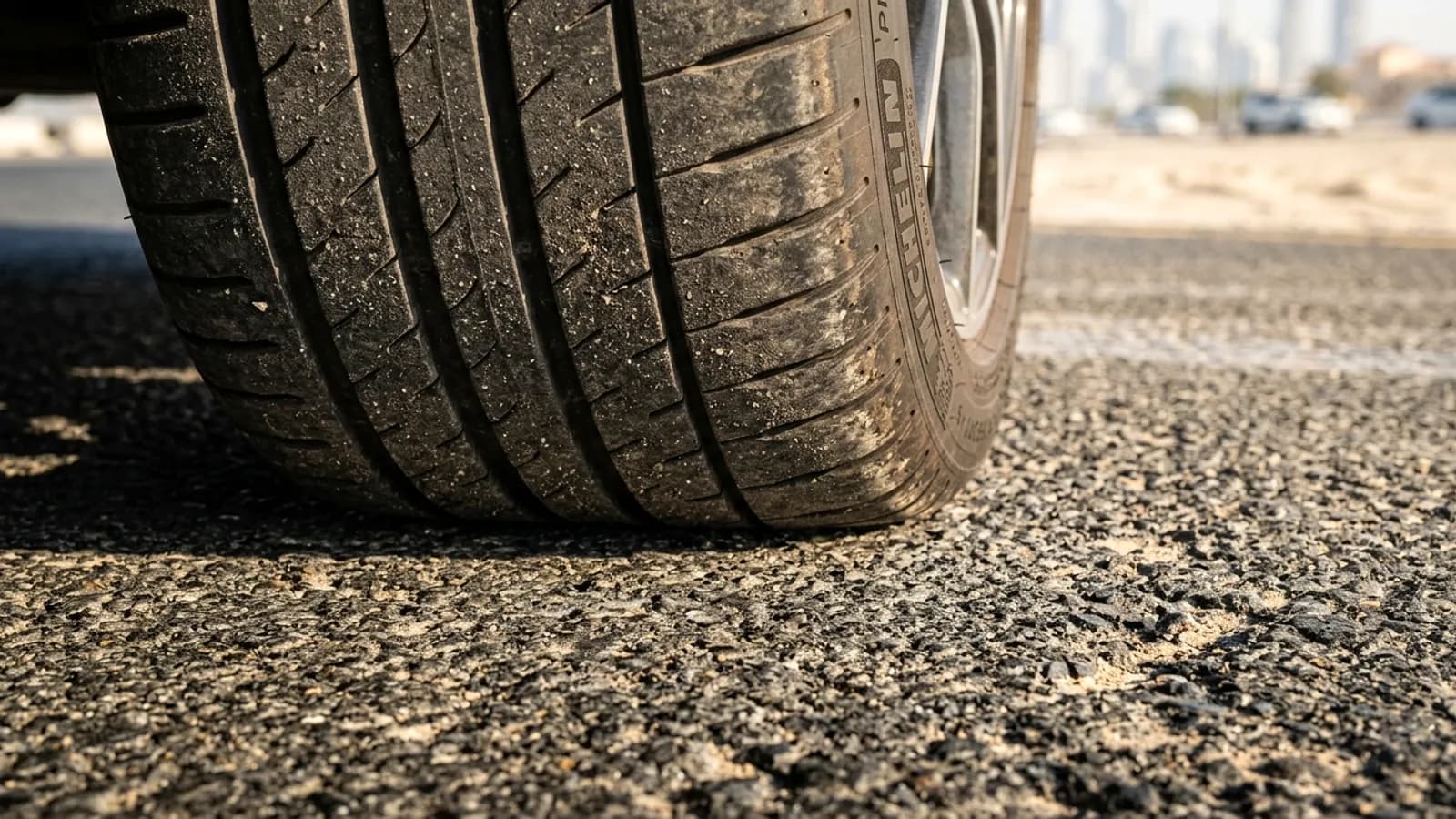
Most tyres have tread-wear indicator bars moulded into the main grooves. When the tread is level with these bars, the tyre is at 1.6 mm and must be replaced. Wet grip, though, drops noticeably well before that point.
Your pre-rain tyre checklist
- Measure tread depth on all four tyres, across the inner, middle and outer grooves. Uneven wear can point to alignment problems. See wheel balancing vs alignment.
- Check tyre pressure when the tyres are cold, first thing in the morning. Use the pressures on your door-jamb placard, not the maximum printed on the sidewall. As temperatures drop in winter, pressure falls with them.
- Look for summer heat damage: cracks in the sidewall, bulges or cuts. Any bulge means the tyre must be replaced.
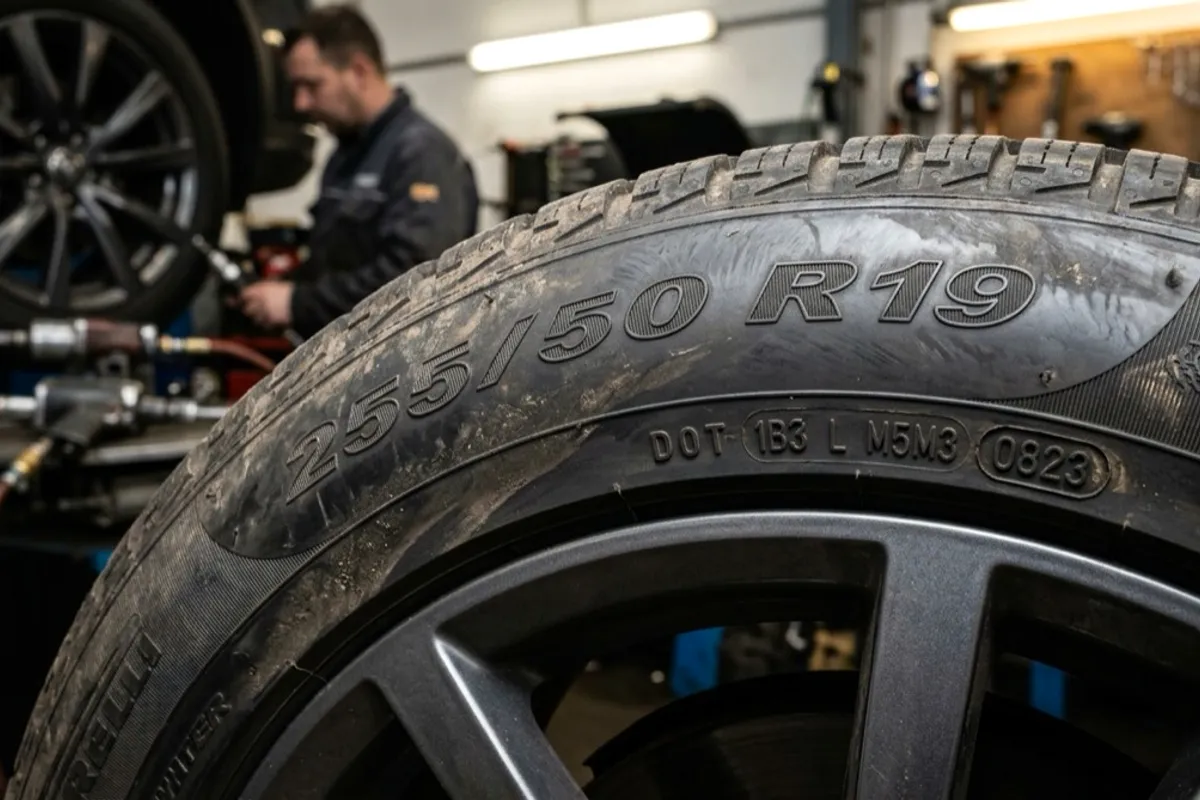
- Check the DOT date. UAE tyres expire 5 years after manufacture. See our tyre expiry guide.
- Check your spare tyre or sealant kit. A puncture in the rain is the worst time to find the spare is flat.
- Replace worn wiper blades. UAE heat cracks them quickly.
How to drive safely in UAE rain
- Slow down below the posted limit, and follow any reduced speed limits on overhead signs.
- Double your following distance. Wet roads can more than double stopping distances.
- Turn on your headlights, not your hazard lights. UAE police advise against using hazard lights while moving, because they confuse other drivers.
- Avoid standing water and flooded underpasses. Water can be deeper than it looks and hide potholes.
- Brake, steer and accelerate smoothly. Sudden inputs are what tip a car into a skid.
- Turn off cruise control on wet roads.
What to do if your car aquaplanes
- Don't brake hard. Sudden braking can lock the wheels or cause a spin.
- Ease off the accelerator gently.
- Hold the steering straight, or steer gently in the direction you want to go.
- Wait for the tyres to regain grip. You'll feel the steering become responsive again.
- Once control returns, slow down further and stay out of the standing water.
Getting a puncture in the rain
If you get a flat in heavy rain, don't try to change a wheel on a busy hard shoulder. Get as far from traffic as you can, switch on your hazard lights once stopped, stay safely away from the car and call for help. Our emergency flat tyre guide covers this step by step. If a tyre bursts at speed, read what to do in a high-speed tyre blowout.
Get your tyres rain-ready with Tyreland
Our technicians can check tread depth, pressure and tyre condition at your home or office anywhere in Dubai, and replace worn tyres on the spot if needed. We're available 24/7, including when the rain catches you out. See our mobile tyre fitting and emergency tyre service.
Tyreland Dubai: 24/7 Mobile Tyre & Roadside Service
Official certified tyres, computerized wheel balancing, and professional roadside assistance delivered to your location in Dubai.
Sources & References
- National Center of Meteorology (NCM) — UAE weather and rainfall records
- Safe driving tips when it rains in the UAE – Gulf News
- Roads and Transport Authority (RTA)
Need New Tyres or Emergency Roadside Assistance in Dubai?
Our Mercedes mobile workshops reach your doorstep at the agreed arrival time with computerized dynamic wheel balancing included.
Frequently Asked Questions
Frequently Asked Questions
Direct, transparent answers regarding mobile tyre fitting, costs, speed, and safety in Dubai.
Most rainfall occurs between November and March, often in short, heavy bursts. Unstable weather can also bring rain at other times of year.
1.6 mm. Below this, tyres are illegal and the car will fail RTA inspection. For safe wet-road grip, replace tyres at around 3 mm.
Cooler air lowers tyre pressure, roughly 1 psi for every 5–6°C. Pressures set during summer may drop below the recommended level on cold mornings. Check and adjust them when the tyres are cold.
No. Use your headlights. UAE police advise against hazard lights while moving, because they make it hard for other drivers to judge your intentions. Use hazards only when stopped or in an emergency.
New tyres with deep tread greatly reduce the risk, but no tyre can prevent aquaplaning at high speed through deep standing water. Speed and road awareness matter just as much.
Use a tread depth gauge, or check the wear indicator bars in the grooves. If the tread is close to the bars, or below about 3 mm, it's time to replace the tyres.