In This Guide
- • How much does puncture repair cost in Dubai?
- • Plug vs patch vs plug-patch: what's the difference?
- • Which punctures can be repaired, and which can't?
- • What to do the moment you get a puncture
- • Do tyre sealant kits work?
- • Will a repaired tyre pass the RTA inspection?
- • Mobile puncture repair with Tyreland
- • Sources & References
- • Frequently Asked Questions
In Dubai, a basic puncture repair typically starts at around AED 50 for a plug and AED 75 for a patch, with a call-out charge for mobile service at some providers. A puncture can be repaired safely only if it is in the central tread area, no larger than about 6 mm, and the tyre wasn't driven on while flat. Damage to the sidewall or shoulder means the tyre must be replaced.
⚡ Key Takeaways
- The safest permanent repair is a plug-patch combination fitted from inside the tyre, with the tyre removed from the wheel.
- An outside plug on its own is best treated as a temporary fix.
- Driving even a short distance on a fully flat tyre can destroy the sidewall from the inside, turning a cheap repair into a new tyre.
- A properly repaired tread puncture can still pass RTA inspection.
How much does puncture repair cost in Dubai?
Indicative Dubai prices in 2026:
| Repair type | Typical price (AED) | Time |
|---|---|---|
| Plug (from outside) | From about 50 | 10–15 minutes |
| Patch (from inside) | From about 75 | 25–35 minutes |
| Wheel balancing after repair | About 20–30 per tyre | Included with some providers |
| Valve replacement (if needed) | About 10–20 | A few minutes |
| Mobile call-out | Varies by provider | Comes to you |
Prices vary with tyre size, run-flat construction, TPMS sensors and the time of day. At Tyreland, you get the full price upfront before work starts.
Plug vs patch vs plug-patch: what's the difference?
| Plug | Patch | Plug-patch combination | |
|---|---|---|---|
| How it's done | Rubber plug pushed into the hole from outside | Patch bonded to the inside of the tyre | Plug fills the hole, patch seals the inner liner |
| Tyre removed from wheel? | No | Yes | Yes |
| Inside of tyre inspected? | No | Yes | Yes |
| Durability | Temporary | Seals the liner, but the hole isn't filled | Permanent, industry-recommended |
| Best for | Getting you home safely | Older method, being replaced by combination repairs | A proper, lasting repair |
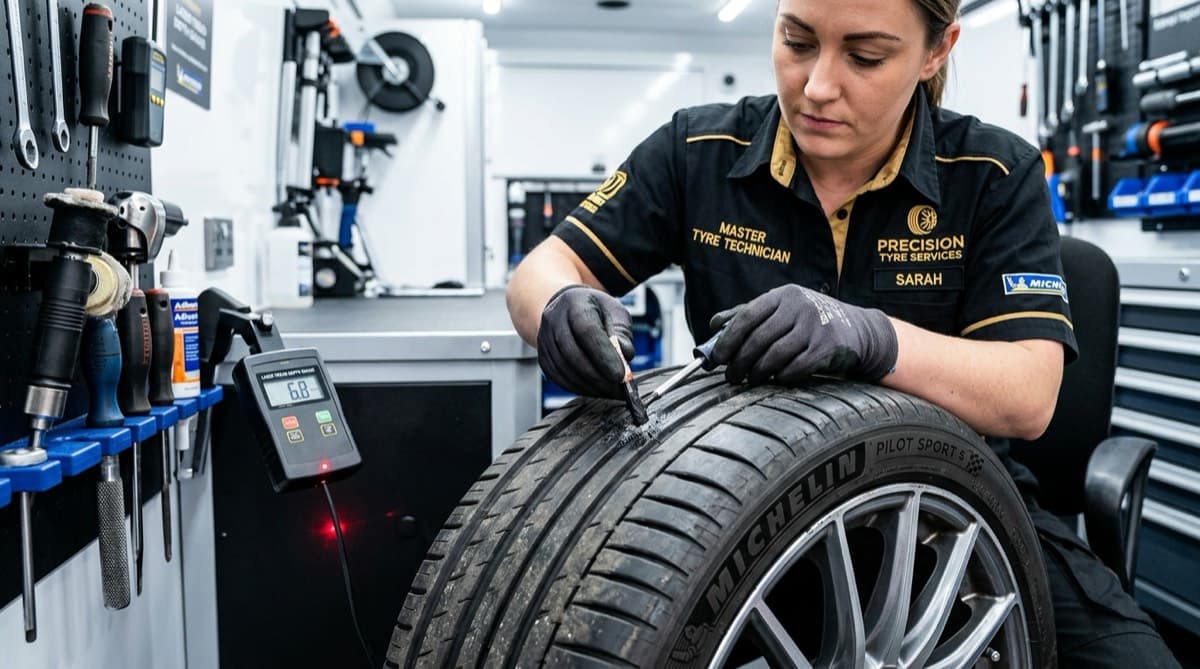
The US Tire Manufacturers Association (USTMA) advises that a plug or a patch on its own is not a proper repair. A correct repair fills the injury and seals the inner liner, and the tyre must be removed from the wheel so the inside can be inspected for hidden damage.
Which punctures can be repaired, and which can't?
| Situation | Repairable? |
|---|---|
| Nail or screw in the central tread, hole up to about 6 mm | ✅ Usually yes |
| Puncture in the shoulder (where tread meets sidewall) | ❌ No, replace |
| Cut, bulge or puncture in the sidewall | ❌ No, replace. See can you repair a sidewall puncture? |
| Hole larger than about 6 mm, or a long cut | ❌ No, replace |
| Tyre driven on while flat (inner sidewall damage) | ❌ Usually no, replace |
| New puncture overlapping an old repair | ❌ No, replace |
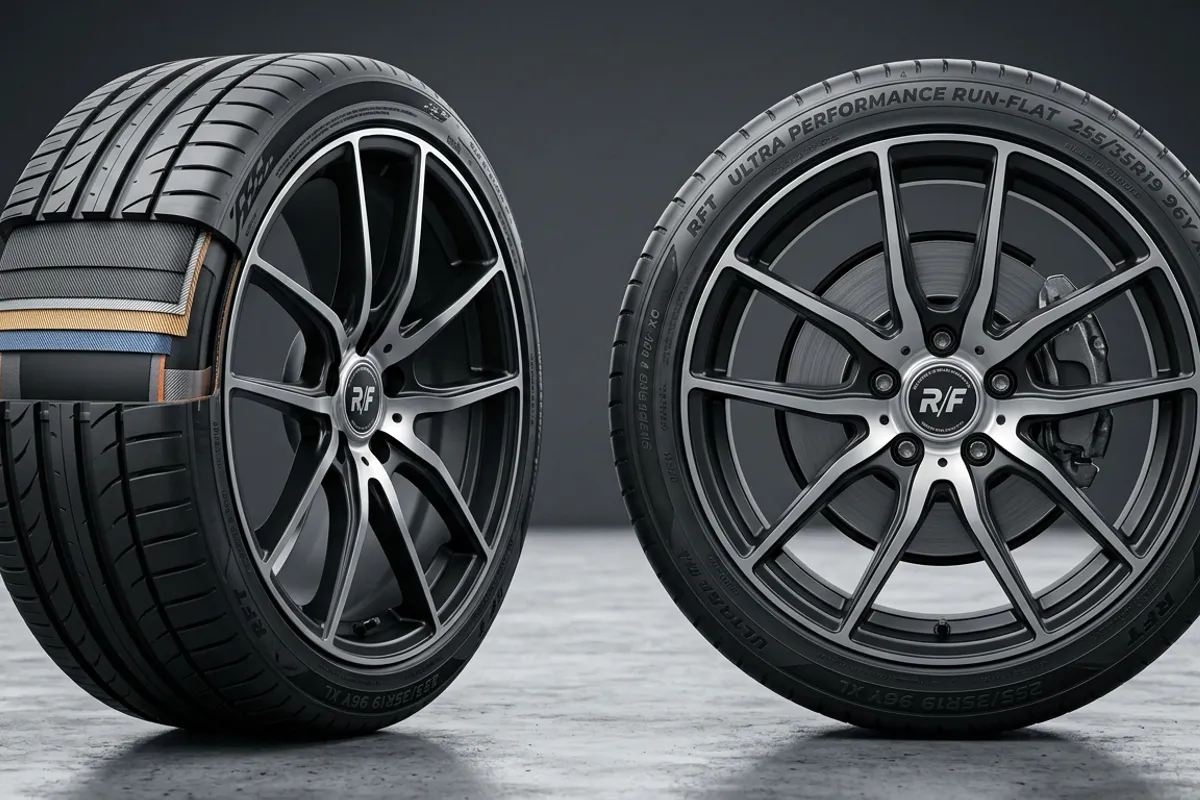
| Run-flat tyre driven while deflated | Depends on the manufacturer. Often replace |
What to do the moment you get a puncture
- Slow down and pull over somewhere safe. On a highway such as Sheikh Zayed Road, follow our emergency flat tyre guide.
- Don't keep driving on a flat tyre. A few hundred metres can be enough to ruin it.
- Leave the nail or screw in place if it's still there. It often slows the leak.
- Switch on your hazard lights once you've stopped, and stand well away from traffic.
- Call for help if you're not in a safe place to change the wheel.
If your tyre bursts at speed rather than going slowly flat, read what to do in a high-speed tyre blowout.
Do tyre sealant kits work?
Many new cars come with a sealant and compressor kit instead of a spare. Sealant can get you moving after a small tread puncture, but it's a temporary fix. Tell your technician you've used it: some sealants make a proper repair harder, and they can damage tyre pressure (TPMS) sensors if left in too long.
Will a repaired tyre pass the RTA inspection?
A puncture that has been properly repaired in the central tread area, with no bulges or structural damage, can still pass. See our RTA tyre passing rules.
Mobile puncture repair with Tyreland
Our technicians come to you anywhere in Dubai, 24/7: at home, at the office, in a basement car park or at the roadside. We inspect the tyre properly, repair it if it's safe to do so, and tell you honestly if it needs replacing. Find out more on our flat tyre repair service page.
Tyreland Dubai: 24/7 Mobile Tyre & Roadside Service
Official certified tyres, computerized wheel balancing, and professional roadside assistance delivered to your location in Dubai.
Sources & References
- This or That: Tyre Plug vs a Tyre Patch – dubizzle — UAE repair prices and times
- U.S. Tire Manufacturers Association (USTMA) — tyre repair guidance
Need New Tyres or Emergency Roadside Assistance in Dubai?
Our Mercedes mobile workshops reach your doorstep at the agreed arrival time with computerized dynamic wheel balancing included.
Frequently Asked Questions
Frequently Asked Questions
Direct, transparent answers regarding mobile tyre fitting, costs, speed, and safety in Dubai.
Usually from about AED 50 for a plug or AED 75 for a patch, plus balancing or valves if needed. Mobile service may add a call-out charge.
A plug can get you home, but on its own it isn't considered a permanent repair. A plug-patch combination fitted from inside is the safest option.
Generally no. Punctures in the shoulder or sidewall flex too much to be repaired safely, so the tyre should be replaced.
It depends on where the repairs are. Repairs must not overlap, and many technicians won't repair a tyre that already has several repairs. If in doubt, replace it.
Only slowly and for a short distance to a safe place or a repair point, and only if the tyre is holding pressure. Check the pressure and get it inspected as soon as possible.
Some can, if the damage is in the tread and the tyre wasn't driven far while deflated. Many manufacturers advise replacing a run-flat that has been driven on without pressure.